
BRINGING "BILLION DOLLAR" FISH BACK TO THE VIETNAMESE TABLE
BRINGING "BILLION DOLLAR" FISH BACK TO THE VIETNAMESE TABLE
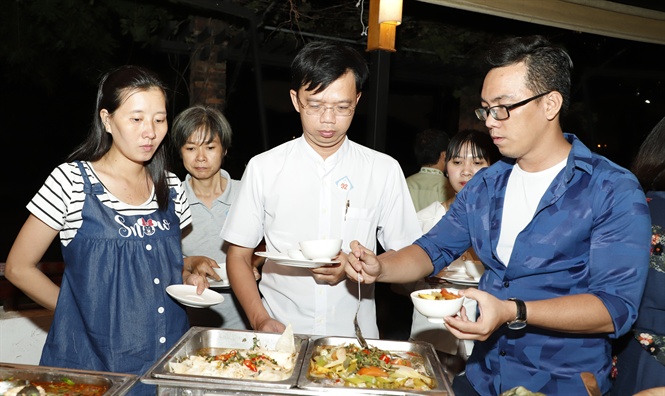
Ho Chi Minh city people enjoy 40 dishes made from pangasius at the Pangasius buffet
Pangasius has been exported to over 150 countries and territories in the world with an export value of more than US $ 2 billion per year. However, domestic consumers still do not really understand the value of this "billion dollar" fish.
In November 2019, the US Department of Agriculture formally recognized the catfish food safety control system (mainly pangasius) of Vietnam which is equivalent to their standards. Thereby, confirming the capacity of quality control, food safety in the production chain, systematic control from the seed to the final product of high quality.
With the desire to bring pangasius back to Vietnamese people's meals, especially on the occasion of the Lunar New Year of the Rat year 2020, the Vietnam Association of High-quality Vietnamese Goods (High-quality Vietnamese Product Association) cooperates with experts and group enterprises organize many programs to promote the quality and nutritional value of Vietnamese pangasius. Most recently, a buffet of 40 dishes made from pangasius was well received by many consumers in Ho Chi Minh City.
Ms. Vu Kim Hanh, Chairman of Association of High Quality Enterprises Association shared: "As Vietnamese people, everyone knows the verse of "rice with fish have been like a mother and daughter", we think from that joy, pangasius is called "fish poverty reduction" for people in the Mekong Delta, now swimming back to their homeland, along with delicious rice grains, as a simple and touching gift for Vietnamese meals".
Mr. Pham Minh Thien, CEO of Co May Company, said that pangasius is a very delicious product, sweet meat, healthy, has many nutritional ingredients ... Vietnam Pangasius has been over 150 countries around the globe regconised, it deserves a place in the domestic market and in the hearts of Vietnamese consumers.
“Usually the best things, the most delicious we take its to export and pangasius also, its using value is much higher than the market value. Therefore, Co May wishes to contribute a part to the journey to return the pangasius", Mr. Thien said.
Source: https://m.nongnghiep.vn/
Related Post

- Mon
12 - 13:19
The true fishmeal carbon footprint
The established Life Cycle Analysis (LCA) methodology to assess the fishmeal carbon footprint only accounts for the vessel fuel and post-harvest processing energy while ignoring the carbon sequestration potential of fish.
View more

- Fri
12 - 08:22
Freezing Tropical Fruits: Convenient and Effective Solution with Octofrost Machines
Tropical fruits are always a great choice for providing nutrition and fresh flavor to daily meals.
View more